
Security

Networkworld

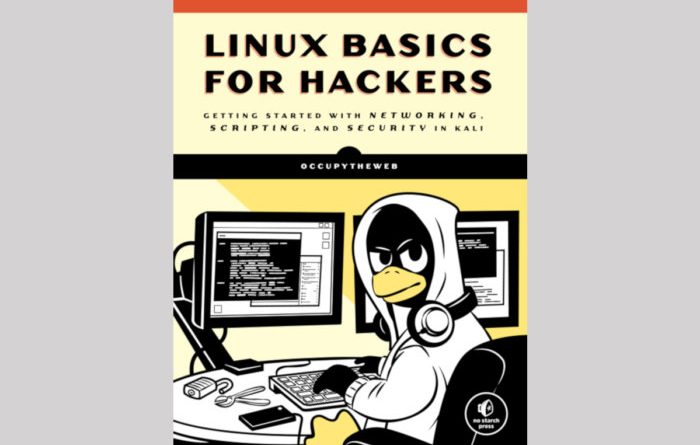
First step to becoming a hacker: Linux!

If you’re contemplating a career in cybersecurity and haven’t come up to speed on Linux, now’s the time to get ramped up and here’s one easy way to do it. This new book from no starch press was written with people like you in mind. Authored by OccupyTheWeb, the force behind Hackers-Arise, Linux Basics for Hackers provides everything from basic Linux command line skills through to scripting, manipulating logging, network scanning, using and abusing system services, and remaining stealthy in the process.Why Linux?
Because Linux is open source, tool developers (and you) have a level of access that is unsurpassed. Linux is transparent and this means that you can learn to manipulate it in ways that are not possible with most OSes. In addition (and undoubtedly for the reason just mentioned), most cybersecurity tools are written to run on Linux.To read this article in full, please click here READ MORE HERE…
Read More
Networkworld

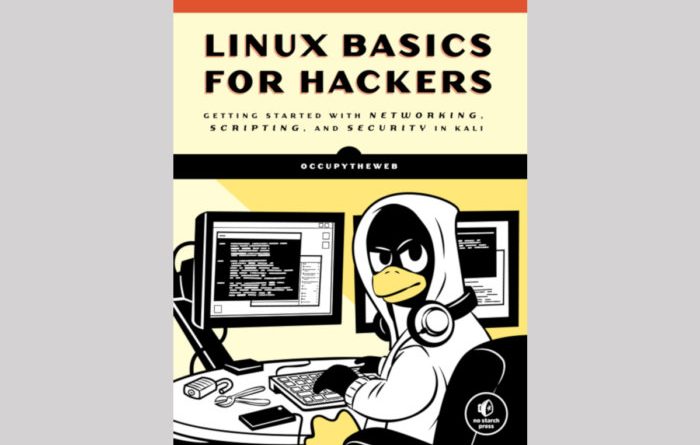
First step to becoming a cybersecurity pro: Linux

If you’re contemplating a career in cybersecurity and haven’t come up to speed on Linux, now’s the time to get ramped up and here’s one easy way to do it. This new book from No Starch Press was written with people like you in mind. Authored by OccupyTheWeb, Linux Basics for Hackers: Getting Started with Networking, Scripting, and Security in Kali provides everything from basic Linux command-line skills through to scripting, manipulating logging, network scanning, using and abusing system services, and remaining stealthy in the process.Why Linux is important to security
Because Linux is open source, tool developers (and you) have a level of access that is unsurpassed. Linux is transparent, and that means you can learn to manipulate it in ways that are not possible with most OSes. In addition (and undoubtedly for the reason just mentioned), most cybersecurity tools are written to run on Linux.To read this article in full, please click here READ MORE HERE…

Read More
Networkworld

Oculeus anti-fraud offering protects against telecom system abuse

When most enterprise companies worry about having their systems hacked by attackers, the main concern is for the enterprise networks. Few companies consider that their phone systems may be vulnerable to hacking resulting in costly toll fraud. Nevertheless, the practice of hacking into corporate PBX systems and injecting fraudulent calls over the network is causing billions of dollars in damage worldwide every year.Enterprise companies use modern PBX (private branch exchange) systems to run their communications. A PBX switches calls between enterprise users on local lines while allowing all users to share a certain number of external phone lines. Modern PBX systems work on the Session Initiation Protocol (SIP), which is a signaling protocol used for initiating, maintaining, and terminating real-time sessions that include voice, video, and messaging applications.To read this article in full, please click here READ MORE HERE…

Read More
TrendMicro

This Week in Security News: Adware and Ransomware

Welcome to our weekly roundup, where we share what you need to know about the cybersecurity news and events that happened over the past few days. This week, learn about an adware that disguised itself as different apps and monitors mobile devices. Also, learn more about the different ransomware attacks Trend Micro has been tracking….
The post This Week in Security News: Adware and Ransomware appeared first on . Read More HERE…

Read More
Networkworld

How edge computing can help secure the IoT

Data created by Internet of Things (IoT) sensors must be secured better, say some. A simple password-on-device solution is no longer sufficient thanks to increasing data protection regulations, a new public awareness of tracking, and hugely proliferating devices. A new kind of architecture using Security Agents should be aggressively built into local routers and networks to handle IoT security and computation rather than offloading the number-crunching to a data center or the cloud, or indeed trying to perform it on the resource-limited IoT device, IEEE researchers say. In other words, IoT security should be handled at the network level rather than device for best results.To read this article in full, please click here READ MORE HERE…

Read More
TrendMicro

Tech Support Scams: What are They and How do I Stay Safe?

If you read this blog regularly you’re no doubt aware that cyber-criminals are a determined bunch, with a large range of tools and tactics at their disposal to rob you of your identity and hard-earned cash. Tech support scams (TSS) are an increasingly popular way for them to do just this. In 2017, Microsoft Customer…
The post Tech Support Scams: What are They and How do I Stay Safe? appeared first on . Read More HERE…

Read More
Networkworld

How ASLR protects Linux systems from buffer overflow attacks

Address Space Layout Randomization (ASLR) is a memory-protection process for operating systems that guards against buffer-overflow attacks. It helps to ensure that the memory addresses associated with running processes on systems are not predictable, thus flaws or vulnerabilities associated with these processes will be more difficult to exploit.ASLR is used today on Linux, Windows, and MacOS systems. It was first implemented on Linux in 2005. In 2007, the technique was deployed on Microsoft Windows and MacOS. While ASLR provides the same function on each of these operating systems, it is implemented differently on each one.The effectiveness of ASLR is dependent on the entirety of the address space layout remaining unknown to the attacker. In addition, only executables that are compiled as Position Independent Executable (PIE) programs will be able to claim the maximum protection from ASLR technique because all sections of the code will be loaded at random locations. PIE machine code will execute properly regardless of its absolute address.To read this article in full, please click here READ MORE HERE…

Read More
Networkworld

What does ASLR do for Linux?

Address Space Layout Randomization (ASLR) is a memory-protection process for operating systems (OSes) that guards against buffer-overflow attacks. It helps to ensure that the memory addresses associated with running processes on systems are not predictable and, thus, flaws or vulnerabilities associated with these processes will be more difficult to exploit. ASLR is used today on Linux, Windows and MacOS systems. It was first implemented on Linux in 2005. In 2007, the technique was deployed on Microsoft Windows and MacOS. While ASLR provides the same function on each of these operating systems, it is implemented differently on each OS.The effectiveness of ASLR is dependent on the entirety of the address space layout remaining unknown to the attacker. In addition, only executables that are compiled as Position Independent Executable (PIE) programs will be able to claim the maximum protection from ASLR technique because all sections of the code will be loaded at random locations. PIE machine code will execute properly regardless of its absolute address.To read this article in full, please click here READ MORE HERE…

Read More
Networkworld

ICANN housecleaning will revoke old DNS security key this week

The Internet Corporation for Assigned Names and Numbers will this week do some important housecleaning from its successful, first-ever cryptographic key change performed last October.In October ICANN rolled out a new, more secure root zone Key Signing Key -2017 (KSK-2017) but the process wasn’t complete as the old key, KSK-2010 remained in the zone. On January 10 ICANN will revoke the old key and remove it from the root zone. The KSK helps protect the internet’s address book – the Domain Name System (DNS) and overall Internet security.To read this article in full, please click here READ MORE HERE…

Read More
Networkworld

ICANN housecleaning revokes old DNS security key

The Internet Corporation for Assigned Names and Numbers (ICANN) this week will do some important housecleaning from its successful, first-ever cryptographic key change performed last October.In October, ICANN rolled out a new, more secure root zone Key Signing Key -2017 (KSK-2017), but the process wasn’t complete because the old key, KSK-2010 remained in the zone. On Jan. 10, ICANN will revoke the old key and remove it from the root zone. The KSK helps protect the internet’s address book — the Domain Name System (DNS) and overall Internet security.To read this article in full, please click here READ MORE HERE…

Read More